

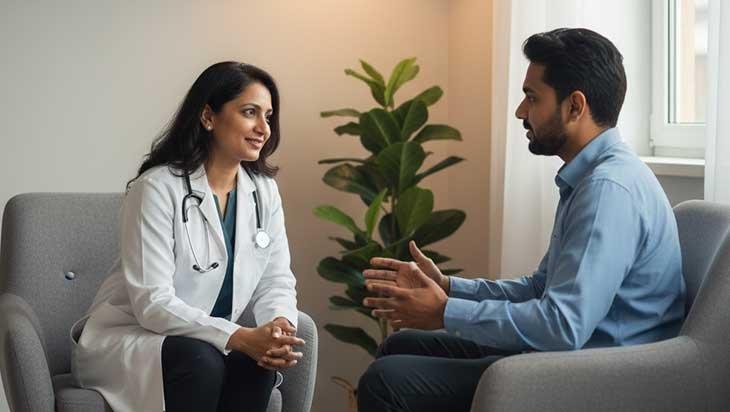
De-Addiction and Detoxification
Ayurveda-based approaches to de-addiction may be considered as part of a comprehensive recovery plan that includes counselling, appropriate medical supervision and ongoing support. Treatment should address the patient’s physical well-being, emotional needs and recovery goals.
The first week of treatment can be particularly important. Alcohol withdrawal symptoms may require assessment and treatment with modern medicine. Depending on the patient’s condition, medically supervised inpatient care may be necessary to support safe withdrawal, recovery and rehabilitation.
The supplied source describes a typical treatment duration of 21–30 days based on its clinical experience. The actual duration of treatment depends on the individual’s condition, withdrawal risk and response to care.
Support from family members or other trusted caregivers can be valuable during inpatient treatment and throughout the recovery process.
Medicines and Dosages
Mochaka Powder
The supplied source lists Mochaka Powder as part of its de-addiction treatment approach.
- Source-stated dosage: 1–2 grams twice daily, mixed with hot water or food, for 100 days.
- Duration: The source recommends 100 days of use, with weekly reviews.
The product’s ingredients, suitability, dosage and duration should be reviewed by a qualified healthcare professional before use.
Relife Tablets
The supplied source lists Relife Tablets as an additional rejuvenation measure.
- Source-stated dosage: 2-0-2.
- Purpose stated in the source: Additional rejuvenation.
The source does not specify a duration for Relife Tablets in this section. Confirm the appropriate dosage and duration with a qualified healthcare professional.
Consent and Medication Safety
The original source suggests administering Mochaka Powder without the patient’s knowledge if the patient is reluctant to take oral medication. Secretly administering medicines is unsafe and should not be recommended. All medicines and supplements should be disclosed to the treating healthcare team and administered with appropriate informed consent.
Panchakarma Procedures
The supplied source describes a Panchakarma-based sequence involving Snehapanam, Ulklesham, Vamanam, Peyadikramam, Virechanam and subsequent supportive procedures. These are traditional Ayurvedic procedures that require individual assessment and appropriately qualified supervision.
1. Snehapanam with Indukantham Ghritham
The source lists the following dosage progression:
- 50 ml
- 100 ml
- 150 ml
- 200 ml
- 250 ml
The source states that a seven-day course of Snehapanam may be used in its protocol, referring to the traditional term “Krurakoshta” in describing patients.
2. Subsequent Procedures
- Ulklesham
- Vamanam
- Peyadikramam
- A further three-day course of Snehapanam
- Virechanam
3. Procedures Following Virechanam and Peyadikramam
- Takradhara: 14 days, as stated in the supplied source.
- Abhyangam: 14 days, as stated in the supplied source.
- SPS: 14 days, as stated in the supplied source.
- Final three days: The source lists two SV sessions and one KV session.
The source recommends starting Mochaka after Virechanam and continuing it for a total of 100 days. The meaning of the abbreviations SPS, SV and KV should be clarified by the treating institution before this content is published.
Treatment Duration and Follow-Up
- Overall treatment: The source describes 21–30 days as a typical duration for its inpatient treatment approach.
- Mochaka Powder: The source recommends a total duration of 100 days.
- Weekly reviews: The source recommends weekly follow-up appointments.
- Family support: The source advises family members to accompany the patient to each review.
Follow-up should be individualized and coordinated with the patient’s medical and addiction-care team. Family involvement should respect the patient’s consent and privacy.
Important Medical Note
Alcohol withdrawal can cause serious complications, including seizures and delirium. A person who drinks heavily or regularly should seek medical advice before stopping alcohol, as withdrawal may require supervised treatment.
Do not attempt to manage severe withdrawal at home or rely on Ayurvedic medicines or Panchakarma procedures as a substitute for emergency or evidence-based medical care. Seek urgent medical help for seizures, confusion, hallucinations, severe agitation or reduced consciousness.
Ayurvedic products and procedures should be discussed with the treating clinician, especially during withdrawal management, because interactions, dehydration and other complications may affect safety.
